
Tailored packages for your practice
Start the digital workflow right away and see for yourself.

M.A.R.A. Plus® Appliance
(8 digitally designed components)
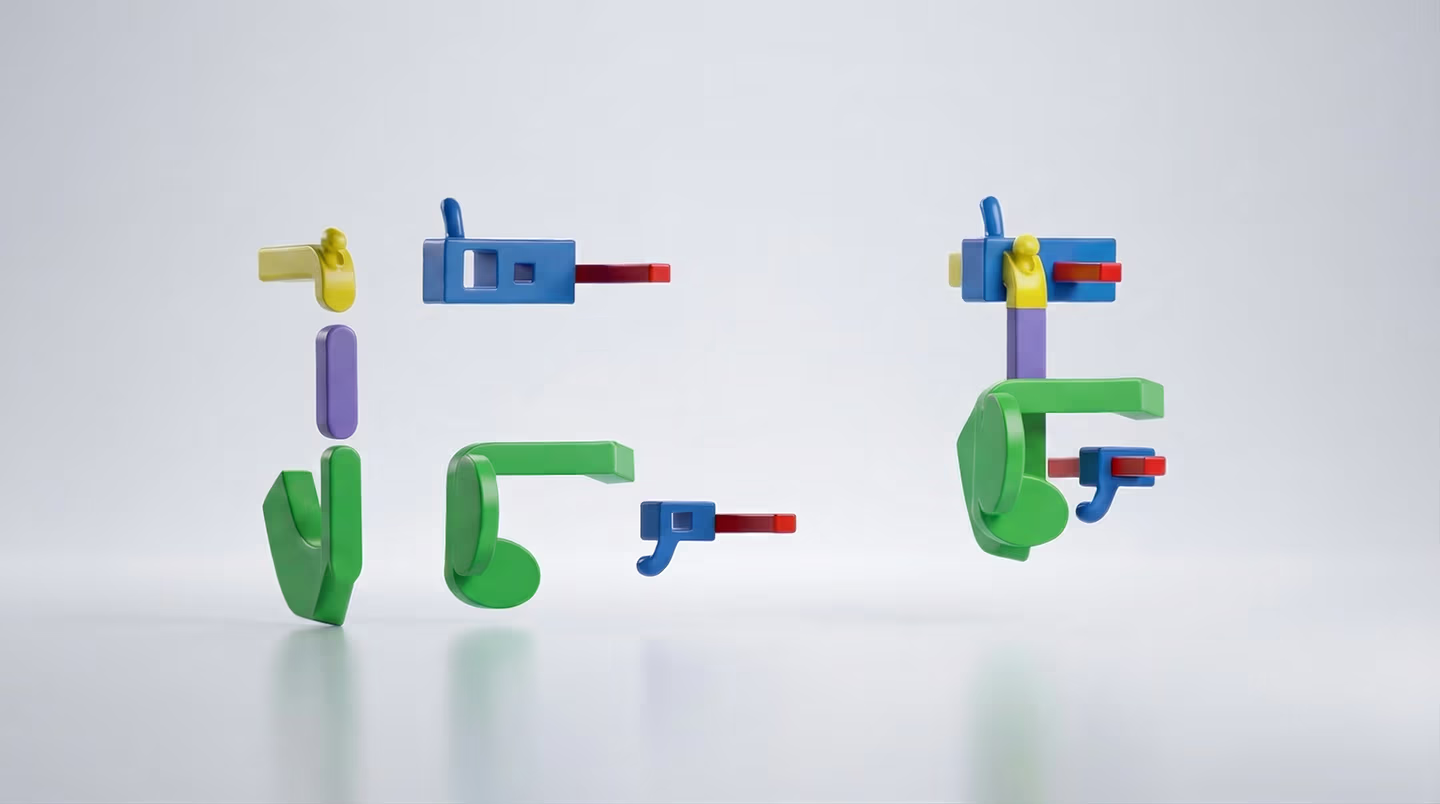
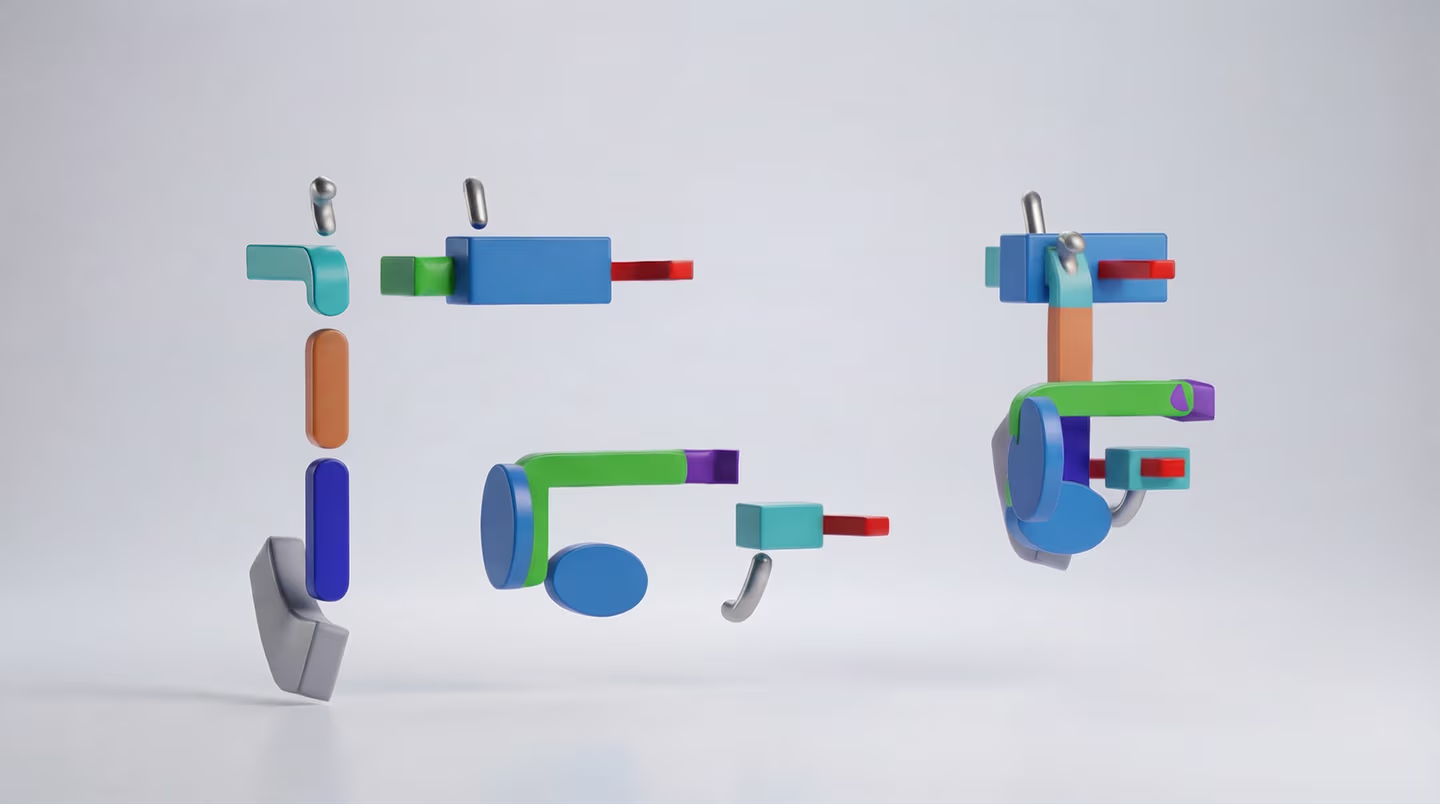
M.A.R.A.-plus® appliance
(16 components designed digitally)
Individual services & training offers
Choose the right support: online, on-site or as a video update — tailored exactly to your needs.

online training
60-minute appointment — 200€
Take part in live training and learn how to use M.A.R.A. plus® — including practical tips for planning and application.

online support
30-minute appointment — €50
Get individual help with planning, designing or integrating your M.A.R.A. plus® cases — flexibly and directly.

Exclusive video updates
Learn about integration, control and removal with illustrative videos — practical and available at any time.

Face-to-face training & workshops
Daily rate in your practice — upon request
Have your team trained on site — individually tailored and directly applicable.
FAQ about M.A.R.A. and M.A.R.A.plus® equipment
The M.A.R.A. (Mandibular Anterior Repositioning Appliance) is a fixed functional orthodontic device for correcting skeletal and dental class II distal bites. It is anchored to the first molars and gradually leads the lower jaw ventrally via the interaction of the elbow (upper jaw) and lower arm (lower jaw).
The functional arms are at a 90° angle to the occlusal plane, only touch each other when biting and generate intermittent, physiological feed forces. The forward movement is carried out via spacers in 1—4 mm steps every 4—6 weeks.
The M.A.R.A. was developed in the 1990s by Dr. Douglas E. Toll (Bad Soden am Taunus) and patented in the USA in 1998 together with Dr. James A. Eckhart (California). The patent was based primarily on the characteristic 90° orientation of Elbows and Lower Arms. Sales were carried out by Ormco and AOA, with the main market being in the USA.
The M.A.R.A. plus® is the digital evolution of the classic M.A.R.A. apparatus. It is based on a modular 8 or 16-component concept, is designed based on CAD/CAM and then manufactured using a 3D printing process (selective laser melting, SLM).
Two special software patches enable efficient and patient-specific design in OnyxCeph.
The design follows the principle of “less but better” and meets the highest standards of stability, usability, hygiene, aesthetics and comfort. The M.A.R.A. plus® is versatile, easy to adapt to different clinical situations and offers a short learning curve and reproducible, predictable treatment results for class II patients of all ages.
Thanks to digital design, M.A.R.A. plus® increases efficiency and design quality, improves documentation and enables precise, tailor-made solutions.
We are among the most experienced M.A.R.A. users in German-speaking countries. We have been working clinically with the device for over 20 years and have treated around 1,000 M.A.R.A. cases together. Our expertise is based directly on the school of inventor Dr. Douglas E. Toll, where we completed a significant part of our specialist training.
Since 2009, we have been sharing our knowledge in workshops and lectures and actively promoting the development of the equipment. In 2022, we brought the first digital M.A.R.A. version into clinical use and have since optimized the M.A.R.A. plus® to the current market-ready version through several stages of evolution.
In short: We combine decades of clinical experience, direct access to original teaching and leading innovative work — making us one of the most important experts for M.A.R.A. plus®.
The M.A.R.A. apparatus works without an inclined plane and without an intermaxillary connector, is anchored to the first molars and requires a lingual bracket in the lower jaw. It can be flexibly combined (TPA, GNE, buccal/lingual multiband) and can be used individually without a fixed treatment regimen. Gradual bite position adjustment in class I ensures comfort and minimizes side effects
The M.A.R.A. gradually moves the lower jaw out of the habitual occlusion into a stable class I position. Since the apparatus has neither an inclined plane nor is intermaxillarily connected and the elbow and lower arm are oriented strictly vertically, the patient must first consciously move the lower jaw forward in order to avoid collisions. The proprioceptive muscle response then supports the learning of the new position through repeated contacts (“collisions”). In the further course, neuromuscular reprogramming takes place so that the lower jaw assumes the anterior bite position independently and stably. After around nine months, the new position is permanently stabilized by Fossa condyle remodeling and a consolidated class I occlusion.
The M.A.R.A. is a versatile tool for correcting symmetric and asymmetric class II malocclusions without affecting the occlusion plane. Thanks to its simple, flexible construction, it can be adapted to different clinical situations and can be used both in early interchangeable dentition and in permanent dentition in adolescents and adults.
The M.A.R.A. also serves as a reliable anchoring instrument — similar to headgear — to repent processed maxillary fronts, stabilize class I molars and avoid anchoring losses, for example in cases of extraction.
Overall, M.A.R.A. can be used effectively wherever class II malocclusions exist or develop during treatment.
The M.A.R.A. works without a rigid connection between the upper and lower jaws — only intermittent forces act. As a result, the adjustments take place physiologically (approx. 1 mm activation every 4-6 weeks), which is significantly more pleasant for patients and causes fewer side effects.
Biomechanical benefits of M.A.R.A.:
- Parallel force line to the plane of occlusion and Attack near the resistance center of the lower first molar → stronger anchoring and posteriorly oriented force effect.
- In autumn, the line of force runs tipped, continues to attack mesially and leads to less anchoring.
- Studies show that the autumn apparatus is a UK front proclination of Ø 3.2 mm hasWhile the M.A.R.A. only Ø 0.7 mm.
- Fewer Intrusion of the upper molars than with fall systems.
- Good dental effects: Ø 2.4 mm molar distalization, minimum load on the UK front (< 1 mm).
Other advantages over autumn and derivatives:
- No intermaxillary connection → no “jumping-the-bite” mechanism.
- Lower risk of a Clockwise rotation of the mandible And a Sloping of the occlusal plane, which is particularly beneficial for vertical face types and Gummy Smile patients.
- Well suited for asymmetric cases, because the occlusal plane is not tilted.
- Significantly lower risk of fractures the apparatus.
In short:
The M.A.R.A. is biomechanically more stable, more comfortable to wear, stronger anchoring and has fewer unwanted side effects than the autumn apparatus and its derivatives — and offers very predictable treatment results.
The M.A.R.A. plus® ideally complements lingual technology: It remains virtually invisible when smiling and has a biomechanically synergistic effect, as the lingual force is behind the resistance center and thus reduces the typical proclination of the UK front.
There are contraindications for acute temporomandibular joint problems, pronounced myoarthropathic symptoms and poor oral hygiene or increased risk of tooth decay. Care should also be taken with vertical dysgnathia with a tendency to open bite. The M.A.R.A. should also not be used for severe skeletal discrepancies with surgical indications.
No The M.A.R.A. plus® does not follow a rigid treatment regimen; the M.A.R.A. plus® can be used flexibly in all treatment phases and age groups. It can be used both in the first phase of treatment and in the second phase during leveling with brackets. Bracket types and bow sequences are freely selectable.
Recommendations for an optimal course of treatment:
- Correct the transverse tightness of the upper jaw in advance.
- Set up the first molars in the OK and UK and fix the rotation.
- Erect retroinclined maxillary front.
- Level distinctive speed curves before using M.A.R.A.-plus®.
- Straighten up standing UK front teeth and release tight spaces.
The M.A.R.A. plus® uses a consecutive bite position adjustment, in which the lower jaw in small, controlled steps is moved forward.
This is important because it:
- Protects muscles and temporomandibular joints,
- Avoids overloads,
- eine precise, reproducible fine adjustment enables and
- to a stable, long-term end bite situation leads.
Briefly:
Step-by-step adjustments are safer, more compatible and more stable than a one-time major change of position.
- controllable lower jaw position
The M.A.R.A. plus® enables a stepwise, reproducible adjustment the position of the lower jaw. Especially in extraction cases where the bite is often unstable or not yet fully set up, this controlled guidance allows exact fine adjustment the sagittal relation. - Stabilization while closing the gap
During extractions, teeth migrate, forces change and occlusion conditions are altered. M.A.R.A. plus® stabilizes the lower jaw position during this phase and prevents unwanted backward movements. - Independence from occlusion level
Because M.A.R.A. plus® does not rely on perfect occlusion contacts, it works reliably even when the bite is caused by closing the gap or moving the tooth. Not yet finally supported is.
- Adjustable lateral guide
Thanks to the modular components (e.g. spacers), the lower jaw position can very fine and independent of sides be discontinued.
This is a major advantage in the case of asymmetrical misalignments that result in differentiated page-specific adjustment require. - Centering the lower jaw
Asymmetries are often caused by muscles or functions.
The step-by-step, guided adjustment helps to gradually move the lower jaw into a symmetrical, reproducible and stable position to guide without overloading the temporomandibular joint. - Adaptation without overload
Abrupt changes in position would be problematic, particularly in the case of asymmetrical joint or muscle conditions.
M.A.R.A. plus® prevents this through the physiological adaptation.
Conclusion:
The M.A.R.A.-plus® apparatus is particularly suitable for extraction and asymmetric cases because it allows a controlled, gradual and very precise adjustment of the lower jaw position — regardless of the current state of occlusion and with side-specific adjustment. As a result, the lower jaw position is stabilized and functionally compatible, even in complex treatment courses.
- Precise digital planning of the position of the lower jaw
With OnyxCeph, the desired lower jaw position can be precisely digitally simulated in advance and transferred directly to the M.A.R.A.-plus® construction. This creates a clearly defined functional starting point for the entire aligner therapy. - Stable mandible guidance with M.A.R.A. plus®
While the aligners move the teeth, M.A.R.A. plus® keeps the lower jaw position stable. This prevents aligner fit problems and enables reliable three-dimensional tooth movement. - Reproducible step-by-step adjustment
The consecutive adjustment of the lower jaw position using M.A.R.A. plus® is controlled and reproducible. OnyxCeph can precisely take these intermediate positions into account so that the aligners always match the current bite situation. - Continuous digital CAD/CAM workflow
Both M.A.R.A. plus® and the aligners are digitally constructed. This ensures a high level of precision, consistent planning and optimal coordination of the two systems.
Brief conclusion:
The combination of M.A.R.A. plus®, aligners and OnyxCeph is particularly effective because M.A.R.A. plus® creates a stably guided lower jaw position and OnyxCeph adapts digital planning exactly to this. As a result, the aligners move in a controlled, predictable, functionally secure relationship.
Do you have any further questions?
Then simply contact us!